
ABOUT OUR COMPANY
Our History
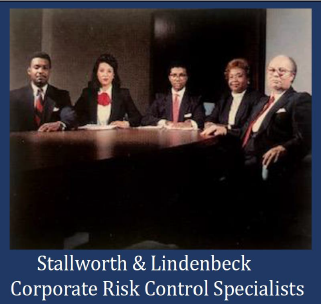
Operating as a Contracted Risk Manager for Detroit Edison, Stalworth & Lindenbeck was one of America’s few African American owned commercial insurance brokerages with the ability to manuscript insurance policies for Fortune 500 Companies for syndication in the Lloyds of London market. Because of its successful performance as a vendor in a non-traditional professional service area for Detroit Edison, Chairman & Managing Director Stallworth was offered a competitive historical opportunity to become the first African American to serve as an electric distribution service contractor in America.
However, with the encouragement of the top executives of DTE Energy, in spite of internal and external opposition that periodically threatened the financial health of the venture, what began as a high risk three-year, $2,500,000 competitively bid pilot contract became a twenty-five year mutually beneficial and strategic partnership “Building A Brighter America Since 1992” through its Core Operating Subsidiaries of Energy Clearance, Energy Construction, Energy Equipment and the Energy Group. This value-added relationship produced an annual contract volume for electric distribution line clearance alone, that never fell below $15,000,000 annually.
- Consulting Services
- Utility Pole Supplier
- Community Engagement
- Vegetation Management
- Distribution Line Clearance
- Line Construction Equipment Financing
In 1997, when service opportunities with Detroit Edison expanded beyond line clearance to include overhead electric distribution line construction, Chairman Stallworth formed Energy Construction. This now gave Chairman Stallworth the ability to create a true craft career program that recruited young Groundsmen, trained them up as Apprentice Tree Trimmers, give them enough experience to become Journeymen, then send them to Line Construction Training which ultimately would lead to a lifelong career as a Journeymen Lineman making in excess of $100,000 per year. But even with the organization of the new company and competitive award of contract work, getting African Americans and Detroit residents into this workforce would not be easy, and would create a “workforce development passion” the Chairman would maintain up to and through his retirement.
That passion focused on over-coming barriers for African Americans to craft training and employment that would lead him years later to author “Best Value Contract & Procurement Policy” required by Michigan law to be used by municipal lighting authorities. Rather than focus on “race participation”, Chairman Stallworth focused the policy on “local participation” as a core economic community benefit.
With the “intent” being to drive a strong return on contracted project investment through prioritizing the use of those in a local community, the Best Value policy would not only be good for predominately African American communities, but all communities as the economic multipliers associated with local business and workforce development are race neutral. The community hosting the project would be intentionally the target of the greatest return on investment.
Chairman Stallworth’s Best Value policy was successfully used in the reconstruction of M-39 (Southfield Freeway in Detroit), construction of Detroit’s 3.3 mile ultramodern streetcar system (M1 rail), Vernor Highway, and today is used on nearly all City of Detroit large-scale infrastructure, neighborhood restoration, and public safety overhauls. It is formally recognized by the U.S. Department of Federal Highway as “an important tool” for states and local governments attempting to achieve significant levels of “local business and workforce participation” on infrastructure projects.
A staunch advocate for advancing career technical education in Detroit by, Chairman Stallworth led efforts to change the negative academic and social class stigma associated with school-based skilled trade instruction and careers by creating an Annual Engineering, Design & Construction Science Expo and successfully achieving a $10 million “capital raise” for a Re-Envisioned Randolph Career Technical Education Center in Detroit. Today, he serves as “an Advisor” to corporations, public entities and utilities on local community and rate base utilization of local businesses and workforces.
In 1998, with the support of Mayor Dennis Archer and executed with the support of Deputy Mayor Freeman Hendrix, Chairman Stallworth successfully recruited, trained and hired 50 African American Detroit residents to work for him on a contract with the City of Detroit Public Lighting Department for Vegetation Management as part of a federal grant to eradicate an Emerald Ash Boar infestation. The leadership of Deputy Mayor Hendrix in 1998 opened the door to these craftsmen to be employed by Utility Services of America’s Energy Clearance Company for line clearance on the DTE property after completion of the grant assignment; without being required to sign a new IBEW contract. The result was the first major craft entrance and employment opportunity for African Americans in electric distribution. Chairman Stallworth ultimately sold the Energy Group in 2016.